How SYSWERX Program works
Every trip, step by step.
01 Register
One record of every trip.
- Traveler, destinations, dates, purpose, and who pays, with a status trail: disclosed, approved, briefed, traveled, debriefed.
- A "Needs you" list: trips awaiting approval, travelers who must be briefed first, debriefs due or overdue, and anyone with no travel briefing on record in six years.
- Every destination carries today's State Department advisory level.
- Notifications and a daily digest, so nothing waits on someone remembering.
Travel register Eastbrook University · Research Security
3
Upcoming
1
Awaiting approval
1
Debrief overdue
1
Concern raised
TravelerDestinationDatesStatus
Dana Vellacourt
Invited talk or seminar
China Level 2
Nov 3–14
ApprovedBrief first
Helen Achterhof
Conference (presenting)
Germany Level 2
Oct 20–25
Briefed
Tomas Lindqvarn
Workshop, course or training
Türkiye Level 2
Dec 1–6
Awaiting approval
Owen Raskell
Facility or site visit
Singapore Level 1
Sep 14–20
Debrief overdue
Wren Halvorby
Research collaboration or lab visit
Japan Level 1
Sep 21–Oct 2
DebriefedConcern
Sample register · fictional travelers · advisory levels illustrative
02 Disclose
Travelers answer by secure link. No account.
- Send a traveler a disclosure form, a briefing to acknowledge, or a debrief, each by a secure link in an email carrying your institution's name.
- The disclosure asks where, when, why, who pays and what they expect in return, which devices are going, and whether research data or export-controlled material is.
- One answer per link, and links expire. Every answer lands on the trip with its date.
What the traveler sees secure link · no sign-in
Pre-travel briefing
Your pre-travel security briefing
Your research security office at Eastbrook University prepared this briefing for your trip to China, Nov 3–14.
State Department travel advisory: China Level 2
⭳ Download the briefing for China (PowerPoint)
✓I have read the pre-travel security briefing for this trip and understand what my institution expects of me.
Type your full name as your signature
Dana Vellacourt
Acknowledge the briefing
Before you go: enroll your trip at step.state.gov.
Sample trip · fictional traveler
03 Know the risk
Every destination, with today's advisory.
- The current State Department travel advisory level for every country, on the register, on each trip and on every country page.
- A country page for every destination: the level and its risk indicators in words, a map with its neighbors by level, what to do before you go, and your team's trips there.
- A pre-travel briefing for any country, with the current advisory and country information and your office's contacts, plus deeper, curated briefings for ten destinations.
State Department travel advisories every country, by level
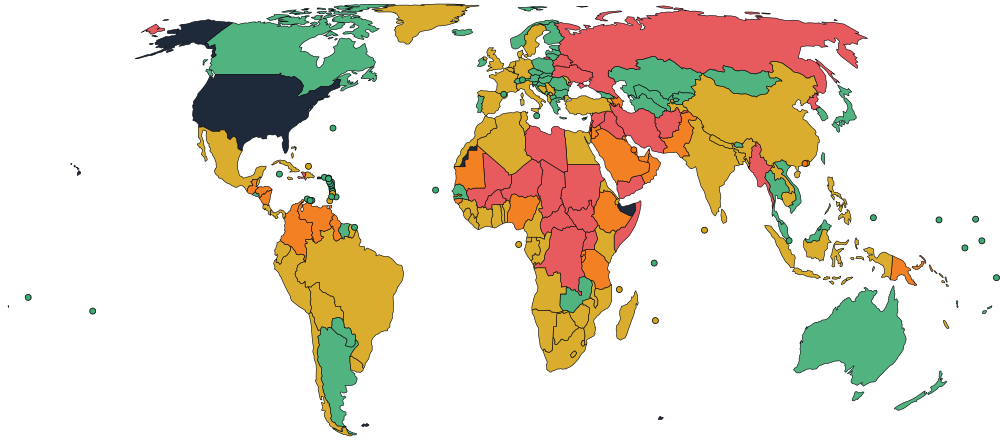
Level 1 · Exercise normal precautionsLevel 2 · Exercise increased cautionLevel 3 · Reconsider travelLevel 4 · Do not travelNo advisory
U.S. Department of State advisory levels as of October 13, 2026 · the product always shows today's
04 Debrief
Debriefs that don't fall through.
- A debrief link goes out after the return, due a set number of business days later. Your office sets the number.
- Plain questions about unusual contacts, questions about unpublished work, devices, border searches, offers and follow-ups.
- Overdue debriefs show in "Needs you", in notifications and in the daily digest.
Post-travel debrief Wren Halvorby · Japan · Sep 21–Oct 2
Did you meet anyone beyond your planned hosts who showed unusual interest in you, your work or your funding?
NoWere you asked about unpublished results, methods or lab capabilities beyond normal conversation?
A visitor at the host lab asked twice for our unpublished sintering data and offered to "help analyze it".
Did any device leave your control, get inspected, or behave oddly?
NoWere you offered funding, an appointment, a visiting title or paid talks?
No1 answer raises a concernAdd to case →
Sample debrief · fictional traveler
05 Connect
Travel and the review, in one record.
- A debrief that raises a concern opens the researcher's case, or adds to it, in one click.
- Trips show on the researcher's record and case page, next to the findings.
- When a mitigation plan sets travel conditions, the trip can't be marked traveled until the researcher is briefed.
- Need to know carries over: a restricted researcher's trips stay with the people on the case.
Travel on Dana Vellacourt's case
● ApprovedTripChina · Nov 3–14
Mark traveledInvited talk or seminar
● DebriefedTripChina · May 6–12
Conference (presenting)
Needs a briefing first: send the briefing link, and the trip can be marked traveled once it's acknowledged.
Sample case · fictional researcher